Published on September 11, 2025
Watch the full video interview on Gamma Prime’s YouTube channel
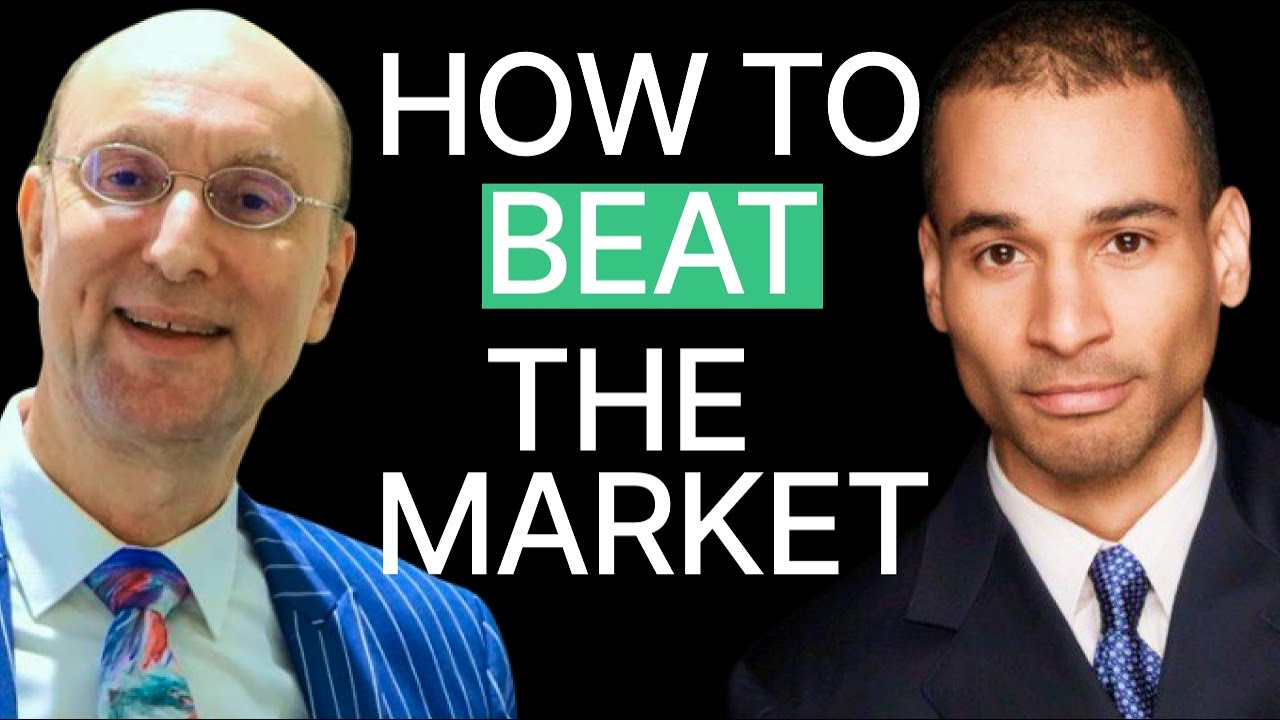
Interview with Arthur Yakubovsky (Co-Founder & Managing Director at Second Renaissance Fund)
In this episode Arthur Yakubovski, founder, and managing director of the Second Renaissance Fund, delves into strategic investments in Web3 infrastructure, particularly in layer one blockchains, where Korath (Director of Capital Markets at Gamma Prime) interviewed Arthur Yakubovski (Founder of Second Renaissance Fund). The discussion covers their unique UT4 method for identifying successful blockchain projects, the importance of avoiding trading and timing the market, and the critical role of global liquidity in market cycles. Arthur Yakubovski emphasizes the fund’s conservative approach, focusing on long-term gains by diligently analyzing projects and strategically employing a yield-generating strategy during bear markets. Additionally, Arthur Yakubovski highlights the importance of aligning investor interests with fund performance and the benefits of thorough research in navigating the volatile crypto market.
Arthur (Second Renaissance Fund)
My name is Arthur Yakubovsky. I’m the founder and managing director of Second Renaissance Fund of Cayman. We are a 200 million dollar fund and we specialize in investing in the infrastructure of Web3, primarily layer one blockchains and various other infrastructure projects.
Korath (Gamma Prime)
Yeah, absolutely. So what are you finding in the world of layer ones? What are you looking for? What are you looking to avoid? What are you seeing in the space?
Arthur
With regards to layer ones, there are hundreds and hundreds of blockchains. We have a great research team and we’ve been able to correctly identify the blockchains that actually have the technology to be able to gain traction because that’s one of the biggest issues for a lot of layer ones.
For example, we were very, very early in Solana, very early in Phantom when no one’s ever heard of them and AVAX, etc.
So these are projects that, in fact, we’ve consistently identified almost every year the best performing blockchains. For example, last year we correctly identified the top four of the top 10 best performing blockchains the year before that. And it’s a matter of analyzing the underlying technology, seeing what advantages it has over its peers and thoroughly analyzing that gives us a real edge.
And that’s why we’ve been able to be the top 20 best performing mutual fund every year for years already.
Korath
And so then what does it take to be able to do that analysis? Is it the expertise in the space that allows you to do it? Is it having the capacity on the team? Is it specific tools and processes? Like what is it that allows you to be able to find those opportunities that nobody had heard about before and are top performers?
Arthur
It’s a really good question. It is in a way like finding the needles in a haystack. We have one big strength, which is our research team.
My co-founder, Marco Witzer, has been doing this since 2010. He runs a research team. I mean, that’s as OG as it gets in the space.
I’ve been doing this since 2013. And when you have that kind of depth and longevity, it allows you to see many things that others are just unable to see, but it is a rigorous methodology.
We call it the UT4 method. U for use case—in other words, what problems is it solving and how does it compare to competitors, traction, team, tokenomics, technology. We look at all of this, so it is a framework.
And that’s one of the reasons we reject more than 99% of the projects that we take on. We do think that the vast majority of projects will not make it. And that’s why I said it’s a bit like picking needles out of a haystack.
Korath
Interesting. And so when you think about products that will make it, what does that look like? What type of thing would represent a use case, etc., in the methodology?
Arthur
Well, just as an example, you can look at something like Avalanche. We identified Avalanche as one of the bigger winners over the next few years, literally at the launch. It launched in 2020, and we were very bullish on it from the start.
We saw it as a great platform for launching all sorts of financial products. Their consensus mechanism was brilliant.
So we understood that they’d be able to—at that time you could process, if you’re lucky with Ethereum, 10–15 transactions a second.
We realized that Avalanche could easily process in the thousands down the road. So it is evaluating what advantages it had over its competitors.
And we realized, well, this is it. And we invested literally at the beginning, right in 2020. And it’s been an interesting ride, and we’re still very bullish on the technology.
So that’s an example of just one. I mean, we have a portfolio of 26 projects, and every one of them is dominating its niche, has unique technology.
So if you can imagine, there are tens of thousands of projects out there, and a few hundred blockchains, but really tens of thousands of projects. Unfortunately, the vast majority of it is toxic waste.
And so, might sound brutal, but it is the truth. There is a lot to wade through.
In the end, I would say there are only a few hundred, what I would call truly investable projects, only a few hundred. And out of these few hundred, we have identified 26, what we think are some of the projects that are best positioned to benefit from cycle to cycle.
And then you figure out—will this project do well in this cycle or in the next cycle? That’s also another consideration.
We don’t want to be invested in a project that will do very well in the next five years, but won’t do well by the end of the cycle. It kind of defeats our purpose.
So there’s a lot of consideration and time is another consideration. At the very end, after all the fundamentals line up, will this project’s fundamentals really get unlocked in the next cycle or in this cycle? So that’s another major consideration.
Korath
And by unlocked, you mean like its use case is really coming to play?
Arthur
Value unlock
Korath
Fascinating. Well, I mean, there are a lot of people who invest in blockchains and there are a lot of people who lose a lot of money, and definitely a lot of people who aren’t the top performing hedge funds year after year. So what do you think people are getting wrong, or what do you think people get wrong when they’re looking at investing into blockchains?
Arthur
The biggest reason is maybe an unusual answer, but the biggest reason is people trade. Trading doesn’t work in our industry. No matter what I hear from people, we publish on a regular basis charts showing that if you miss the top 10 days in a year, in 365, your performance is negative.
So for example, look at Bitcoin. On the average, your performance is, let’s say, 150% per year.
And how well can a person predict 10 numbers out of 365? Take the lottery, for example. I’m Canadian, I’m originally from Toronto. We have this popular lottery called 6/49—six numbers out of 49 chances.
I was very good at math as a kid. So I actually figured this out when I was maybe 17 years old. I figured out using the knowledge I learned from my algebra class that it’s one in 13 million, the probability.
So that’s six in 49 numbers. So how difficult is it to predict 10 numbers out of 365? The answer is one in a trillion.
And so if you actually miss those top 10 days—and why do things go up on those days? Well, it’s news. By definition, it’s new, it’s unexpected. You cannot predict it.
So if you miss literally the top 10 days, your performance, instead of 150% on the average, goes down to minus 34% as of December 34.
So in other words, by playing the lottery—and we publish this data, by the way, for the benefit of our investors on a regular basis. We are passionate about this research, and we are happy to share it with our investors and your listeners.
They’re welcome to contact me, happy to share some of this research. Contact me at Arthur at secondrenaissance.com, request this research, happy to send it to you.
And that’s the most shocking part. How can an asset class, which is the best performing asset class, if you miss the top 10 days—just 10 days out of the year—your performance is minus 34%?
So you asked why people lose money. That’s the biggest reason why people lose money. They trade, they try to sell, they try to time the market.
That strategy is proven not to work. And so if you invest in the really simple things—really simple things—and you don’t trade, you buy at the end of the cycle, you sell when things are getting frothy, you do no trading in between, you end up outperforming literally some of the best funds. You won’t outperform us, but you’ll end up outperforming maybe outside of the top 50–100 funds.
Korath
And this phenomenon—does it exist the same way in non-crypto traditional markets?
Arthur
The answer is yes, it does. We actually mapped this out again. We took NASDAQ, we took 500, and it’s very easy for someone to duplicate our research. There’s no magic to this. You just have performance for every single day; for the top 10 days you put zero because there’s no performance on that day. And then you see what it performs. I mean, it’s not rocket science. It’s just, we made it into charts that are easy to see. The performance is basically negative for S&P 500, for NASDAQ. And it gets even worse.
If you take an entire span of, let’s say, this bull run in stocks started in 2003. So we have basically 22 years of data. Guess what happens if you take 22 years of S&P 500 out of this entire data set of 22 years times 365 days. Well, it would be less days because trading days, say 300 days times 22 years. You take this entire data set—can you imagine out of this entire data set, if you remove the top 10 days, you would probably hardly have any effect, correct?
Korath
I would assume so. And that’s even what I was thinking—is, okay, maybe this is a crypto phenomenon because crypto is so volatile.
Arthur
You would assume so. No, it is not. The crazy part: if you remove just 10 days out of the entire time span of 22 years, your performance goes down in half. Half. So this is a phenomenon for stocks, for crypto. It’s one of the reasons why we discourage people from trading. As my partner wisely says, people have trouble sitting on their fingers and doing nothing. They want to place trades. And so buy and hold works and every other half-baked theory simply does not.
Korath
I can relate to that through some previous trading experience, volatility options and volatility futures and options. And it’s hard not to, especially when you’re focused on that being the thing.
Arthur
We want our clients to understand this. We published this research. This was proprietary research that was only available in the past to our investors. We recently opened up this research. So your viewers are welcome to email me, arthur@secondrenaissance.com, and I’m happy to share this research. So if we can only ensure that they don’t trade, that they actually hold on through the whole cycle, they’ll end up outperforming literally most of the funds.
Korath
And that’s ARTHUR at secondrenaissance.com.
Arthur
That’s right. At secondrenaissance.com.
Korath
So why 10 days? Why not five days? Why not 20 days? What did you model this and you found that that was the number?
Arthur
Wonderful question. Ten days, because it’s a round number. Well, we actually now have a tool that we’re opening up shortly to all of our investors where you can model any amount of days you want. You will be able to put five days, 13 days, 20 days. You’ll be able to put any amount of days. You in the future will be able to put any asset you want, and the chart will recalculate what your performance is if you miss that exact number of days.
So 10 days is completely arbitrary because it’s a round number, but we would like people to understand what it is in the top five days, what it is in the top 20 days. But it’s pretty dismal. This is why maybe Michael said to me, I remember, “Arthur, this is why I love your opinions because you always have such an original take on things, like original thinker.” To us, it’s just common sense. We’re very conservative investors. I know that sounds funny. How can you be a top 20 fund and be conservative?
Korath
Top 20 fund doing crypto and you’re conservative.
Arthur
Well, we stay away from garbage. That’s how we’re conservative. We’re extremely conservative in our approach. We reject almost everything that comes across our desk. Very few things get approved.
We also look at where we are in the cycle. For example, right now, we would not invest in anything that requires a lockup because it automatically means we would be locked at a time we should be liquid. We want to be liquid. We think the peak is going to be in about a year, plus or minus a few months. So the last thing we want is a lockup. It’s not just for clients. We get 25% performance fee. That’s our bread and butter. So if we screw it up for clients, I am screwed.
Korath
Do you do no AUM though? Like no AUM and more aggressive performance fee?
Arthur
What we do is, well, we obviously pay custodians. We have an administrator, everything. Those are pretty heavy-duty fees. So you need some. We charge 2% management fee. But that’s nothing. That just costs us to run the fund. We live off basically performance fees. And so if we time the peak incorrectly, or we’re not watching this kind of stuff, we’re not liquid enough towards the peak, I’m personally screwed. So no thanks. And we expect to retain, I don’t know, 98% of our clients. So the only way to do that is, and that’s how it’s been, very few people leave us. We have hundreds and hundreds of investors. Two people left us last year. One person left in 2023, one person in 2024. Very few people leaving us.
Korath
Which is surprising because personal reasons come up for people where they just need their capital back, regardless of the performance, a divorce, a health issue, things like that. So that’s amazing, that level of attrition, even with the performance.
Arthur
You’re right. Our audience, you could say, self-select. We don’t take people who are not good candidates. We’re long-term oriented. So unless you’re going to be with us for years, we’re not interested in you as a client. We want you exactly for this reason: we want you to partake in the gains over the entire cycle.
If you can’t be with us over the entire cycle… Now is a little bit different because we’re towards the end, so it’s actually a good time to invest, but you would have missed hundreds and hundreds of percent in gains that already happened. But the biggest gains by far are still ahead of us. For example, in the final year of the last growth cycle, we delivered 516% to our investors. So best gains are still to come.
We really do want clients that will stay with us the whole cycle. And if you’re entering the cycle late, like now, take advantage of it. But we set expectations: expect to be with us. We don’t have a lockup, but we do expect people to reinvest 75%, at least 50% of their gains into the next cycle. We want long-term investors.
Korath
And so what does that look like? What would be an example of an annual return?
Arthur
For example, 2023, we did 313%. So that’s a typical return. Typical for a good year. A bad year might be, I don’t know, a hundred-something. So it depends on the year.
On average, we expect to outperform. The index we try to gear against is a CFR index. That’s done fairly well over the last couple of years—it did 134%, if I’m not mistaken, which is very good. But our goal is always to outperform it by a few X. For example, in the last cycle, which is a good way to measure what’s possible, we outperformed CFR index by 4X. We outperformed BTC by 8X.
We did 516% in 2021, BTC did around 60. That’s what we expect. We don’t actually expect BTC to do that well between now and the end. We think the biggest gains are behind it, maybe 150 peak. I know there are crazy numbers out there. We’re definitely on the conservative side of it.
And if we’re wrong and BTC does $200,000, okay, great. Then our conservative numbers are thrown out the window and our portfolio can do even better because the type of stuff we invest in tends to do amazing in this last stage of the growth cycle.
But yeah, we don’t actually expect BTC to do more than 150, 160, 170 in that range. And if it surprises and outperforms, we will be happy. But we don’t draw for our investors pie-in-the-sky pictures. I know there are some 300,000, 500,000 predictions. They do it for clicks. We do it because our livelihood depends on it.
Korath
Your interests are aligned with your investment.
Arthur
We make nothing. We literally make nothing – we screw up. My entire family’s fortunes are tied to our brain being awake.
Korath
Which, as an investor coming in, that’s what I’d want—to say, our interests are completely aligned. For you to win, I have to win. There’s no form of this where you can win all day and I can lose 20% in a year.
Arthur
Hundred percent, you know, what’s even crazier than that. You take it a step further. Why are funds not so much concerned about selling as close to the peak of a cycle as possible, waiting for the dip and reinvesting.
There are many signs that start flashing towards the end of the cycle. Most funds just don’t care. They hold on. And that’s why funds, for example, some of the biggest funds in our industry were down 90% or more in 2022. I don’t fully understand why funds just don’t care about it. I understand lockups is a big issue. And that’s one of the reasons we don’t like lockups towards the end, but even the strategy of our fund is completely different from the average fund.
Our goal is to sell as close to the peak as possible. Our goal is to sell within 20, 25% of the peak, wait until the bear market is really in its prime and offer yield during that time. We offer yield during that time. And then the cycle repeats where we start investing again when we feel we’re close to the bottom. It’s shocking to us that something so obvious to us, that’s our philosophy. It’s shocking to me that other funds don’t care, don’t do it. Why? I don’t know, to be honest with you. I don’t understand it. We don’t know, but that’s been our philosophy from day one. And that’s what we’re planning to stick to.
Korath
Well, the way you explain it is very straightforward. It’s very simple. It makes complete sense. Totally common sense. Oh, what you said about, you provide yield when you’re out of the market.
Arthur
The idea for us is that we would like to sell as close to the peak as possible within 20, 25% of the peak. We go to yield strategy at that point. We could generate easily 15% or more yield very safely. There are many strategies to generate yield in our industry. And then the cycle repeats.
In other words, we don’t want to be riding the entire… you could be down 80, 90%. We’re not interested in this. It impacts our earnings. As you very appropriately said, our interests are completely aligned with our investors. If they don’t do well, we don’t do well. And so how will I buy bread and milk if we’re not following the strategy? So it’s a complete win-win. The better our clients do, the better we do.
And so if we’re able to sell as close to the peak as possible, offer yield during the bear market, and then the cycle repeats, we’re able to start at a much higher position at the very beginning. We’re able to have higher performance fees because we live off performance fees. We charge 25% performance fee. In other words, the better we do for clients, the more we take. So completely win-win. The incentives are aligned properly.
And that’s, by the way, one of the problems that a lot of people that pitch stuff on YouTube, etc., the incentives are to sell advertising, to get clicks. That’s not a great incentive. And that’s why most of the things on YouTube are not reliable. In fact, I would even say that a lot of the data on Twitter is completely unreliable. The reason why—it’s free. It’s free and people are not going to share their most incredible secrets for free.
And if you have an incentive, if you know that your performance is directly impacted by what you do for clients, you work your butt off. You hire the best research team you can possibly get. You use all your expertise. We use all sorts of signals, analysis, charts, graphs, and we share this research with our clients on a monthly basis. We think that the best investors for us are the most educated investors. The more they understand about what we do, the more they appreciate the thought process and all the work that goes behind the scenes to generate for us sell or buy signals and research in general.
Korath
Yes, absolutely. And I want to come back to this idea of alignment of incentives or malalignment of incentives and what that means. But on the yielding strategy, so you’re essentially going from a growth strategy and then you switch to a yielding strategy.
Arthur
To yield and back to growth.
Korath
And back to growth. And so is that yielding strategy, is that also a blockchain or crypto?
Arthur
Yes, of course. It’s difficult to generate. Now it generates even more. We could generate above 20%. But during the bear markets, we don’t think we can go above 15. So we’re just realistic. That’s right. It’s all based, but it’s a very safe strategy. It works beautifully in bear markets. You can do it using, for example, selling covered calls and other very safe strategies that are even appropriate for retirement accounts.
In traditional markets, selling covered calls is accepted even in retirement accounts. So for us, it’s a little bit more sophisticated. There are a few things that need to be done in crypto that don’t need to be done in traditional finance. And of course, we’re very big on custody. Custody is one of the most important things. We use state-of-the-art institutional grade custody. In fact, my partner in the fund, Marco Witzers, early on realized how important custodians will become. And so he designed custody solutions for banks, for other hedge funds.
So it’s a combination of things that make the formula work, if you will. But it is basically a yield strategy. But it’s related, of course, to Web3. We’re not invested in gold or something like that.
Korath
Yeah, absolutely. To hear you talk about it, it sounds very simple when you talk about it. I can’t say that I’ve necessarily seen that specifically. I mean, I’m in that concept I’ve seen of, you know, invest through the cycle. But just to…
Arthur
It is an unusual strategy. Most funds, they’re okay with the fund going down 90% during the bear market. Like in 2022, we know one of the biggest funds in the world let their entire portfolio slide 90% and they were okay with it. Well, we’re not okay with it.
Korath
Does it come back at all to the incentives and having, you know, they don’t get AUM when they’re uninvested? Is that a dynamic?
Arthur
It’s difficult to say why people do things they do. I can give you a real-world example. 80% of businesses go bankrupt within five years. 90% of restaurants go bankrupt within five years. So a lot of people don’t necessarily make the best decisions when they’re in business. Maybe it has something to do with that. It’s difficult for me to say why, but I’ve wondered the same question all my life. Why do people make some decisions that I think are questionable? And I don’t have an answer after 37 years of having one successful business after another. I don’t really understand why people do the things they do, but for whatever reason, that’s their choice.
Korath
Right. And like in an environment where there is data on these things and people can look at them and see the patterns and they still make these decisions anyway.
Arthur
I don’t know. Maybe they’re too big to care. I don’t know. We’re a mid-size fund. So maybe that’s why. I don’t know, but I don’t see why our strategy would change when we’re at 10, 20 billion dollars. But yeah, to answer your question, I’ve been wondering the same question for 37 years that I’m in business. Why are my competitors doing mistakes that are clearly mistakes in my opinion? And why do they continue doing them? I’ve wondered the same question for 37 years. And I still wonder. I don’t know.
Korath
That’s phenomenal. And maybe you just answered this question, but what do you think happens when there’s the malalignment of incentives? Like the way that there’s kind of the AUM and the coupon clipping environment of the fund winning and the investor winning not being necessarily the same thing.
Arthur
When there is a misalignment of incentives, your performance basically suffers. You could ask the same thing: what happens when there is a misalignment of incentives in governments? For example, you take communism. Why did communism in the Soviet Union fall? Why is it such a terrible system in Venezuela, in Cuba? There is no incentive. So what happens is just like in funds, as in government, as in life, when there’s a misalignment of incentives, the average person suffers.
The only reason why a lot of them are able to get away with misalignment of incentives, when it comes to governments, people are trapped because of geographic constraints. And when it comes to the fund, some people invest and maybe they’re not reading quarterly reports properly. Maybe they’re not, they haven’t discovered Google yet. I’m not sure.
Korath
Right. They might think this is just what’s happening.
Arthur
Yeah. That’s just what’s happening. They’re too busy doing, let’s say you’re managing for someone $200,000, but they have a portfolio of another $5 million. And to them, they’re okay with 18% returns instead of 150% returns, but they are not aware of it. So perhaps it’s that.
Korath
Yes, absolutely. And do you think that there’s any aspect to it, as far as people sticking around to the… essentially the kind of how there’s the wealth manager role? A big part of their role, of course, is getting clients. But a lot of it is stopping attrition when the market goes down. And so when the market tanks, they’re just working as hard as they can to convince people to stay.
Do you think that there’s maybe, or like aspects of that, where the funds themselves communicate the way that they’re communicating or essentially trying to communicate this, “well, everything’s going down, you know, this is normal,” that sort of approach?
Arthur
Unfortunately, you’re right. It is an issue. And we’ve solved that issue with lockups. We’re literally saving clients from themselves. So when you invest with us, you’re locked until we think the cycle is over.
And by that, we are completely getting rid of the problem of people selling at exactly the wrong time. If we can save people from themselves. For example, if we think the cycle is over by the end of this year, you’re locked until the end of that year. And so we save you from selling at exactly the wrong time.
For example, we think this current dip is a kind of a COVID-style dip. And we do think it’s going to be a V-shaped recovery. And so people are going to sell—a lot of people will sell right at the bottom. We called the bottom within one day, we said April 7, and it ended up being April 8. And so we think there’s going to be a V-shaped recovery now.
There are so many people who sold and will now end up buying much, much higher in the market. And what’s interesting about the research we put out, even to take it a step further, not only does the market make most of its gains in just 10 days, but it gets even worse. Some of the biggest days of the year happened within two weeks of some of the biggest losses of the year.
And so people think, let me wait it out, because my advisor doesn’t know what they’re doing, or whatever it is. Let me wait out for a couple of weeks. That couple of weeks is when one or two or more of those big days happen that causes their portfolio to greatly outperform. And they just missed out.
So the way that we solve that is with lockups. We try to make sure that we’re the ones deciding when the peak is and not the client, because unfortunately the average person is too worried about macroeconomics. For example, we put out a quarterly report, and your viewers are welcome to reach out to me. We put out a macro report for Q4 2024, where we explained the importance of global liquidity to our asset class.
And we actually said in it something that a lot of crypto natives might find very controversial, but we actually said that 90% of Bitcoin moves can be explained just with global liquidity alone. For crypto natives, “Oh my God, what about the technology? What about this, et cetera?” Well, yes, the magnitude cannot be predicted, but the fact is 90% of the moves in Bitcoin can be explained alone by one factor, which is global liquidity.
So if you monitor global liquidity, which we do on a regular basis, you can actually predict what’s happening. Global liquidity is actually peaking towards the end of 2025, early 2026. And we think that that’s likely to coincide with the peak in our growth cycle as well.
Korath
Right, right. Well, and I really want to dive into where your view is on, if I can ask, where your view is on where we are now. But just before we get there… there’s many parts.
Arthur
Don’t worry. We can edit that out. We got the magic of editing.
Korath
Oh, absolutely. I mean, I’m just getting excited about our conversation here.
Arthur
And what’s funny, isn’t this stuff simple? This is the craziest part of all. It’s so simple. And that’s what I tell my kids. Sometimes the most profound and amazing things are so simple. People make it so complicated. It’s actually quite simple.
Well, you just have to analyze data. That’s part of our research. So when you analyze the data, and that’s another expertise of ours, we’re able to bring it and explain complex topics in a very easy-to-understand way.
In our Q4 report, which is a really good look at the entire 2025 as a roadmap to the year, we explain, and you’re welcome to read that report. I would love to read it. You can see where we think we are and what the macro landscape is. When you really analyze this data and understand where we’re going, it’s much easier to make everyday decisions. Then you avoid trading. Then you avoid all the noise. We think most of it is noise that needs to be tuned out, and very few signals.
No, we actually think that good research can be explained quite easily. In a quarterly report for Q4, we did that. We basically explained what top bond traders understand, and we explained it in a way that the average person can understand with regards to liquidity, with regards to how yield curves get manipulated by governments. We explain why the U.S. government basically has no choice but to do X and Y, and governments around the world. There are some things, and like I said, we make complicated topics easy to understand for people. And that’s also part of the strength of our research: we’re able to explain it in a way that maybe not the average person, but the average investor, can understand.
Korath
Right. And I feel like I see it around the investment community where people try to almost confuse, like they try to make this sound very smart and make it more complicated than it really is. And then people go, “Wow, that’s smart.”
Arthur
In fact, there is a wonderful expression that describes exactly what you’re saying: if you can’t dazzle them with brilliance, you baffle them with baloney. So it was… actually bull dot, dot, dot, but I’m not sure I’m allowed to say that.
Korath
Oh yeah. We’ve got editing. We’ve got bleeping. We’re good.
But yeah, coming back to liquidity and the impact on the cycles and timing the cycle… how do you measure global liquidity? What’s included in that?
Arthur
That’s a really good question and a complicated one. There are different kinds of data that is available. There are services that actually do nothing but monitor global liquidity.
For example, this is a Q4 report. So you’d say, “Well, how has it been in Q1?” It’s been going, and if you ask us what we could have changed in our Q4 report in hindsight, the answer is nothing. We stick by our report. We think we’re accurate, and everything we’re seeing in Q1 just solidifies our position even more.
For example, China had massive global liquidity. Keep in mind, it’s not U.S. liquidity; it’s global liquidity because we’re a global asset and we’re not influenced only by what the U.S. does. We’re influenced by global liquidity. In fact, I remember the data from… I can’t remember the exact number from this year, but last year only 13% of wallets actually belong to U.S. citizens.
So as much as the U.S. is important to our asset class with regards to funding projects—which, of course, can go anywhere and fund projects anywhere in the world—U.S. users are actually the minority here. So it is a global phenomenon. And global liquidity plays a big role. We see this global liquidity pickup. We monitor it on a monthly basis.
This is institutional-grade research. The average person probably would not be able to afford it. But by being on our list and having access to our reports, we update these numbers every quarter. So they don’t need to spend a penny if they’re connected with us in some way, shape, or form.
Korath
Absolutely. I’m excited about these reports. Can you tell me a bit about where the Q4 report was and are you able to tell me about where the Q1 report is going at all or is that…?
Arthur
Correct. So the Q1 report, obviously it’s too early still to discuss it. We are not even allowed to discuss the Q1 report.
But the Q4 report, if you ask me how applicable it is in Q1, we wouldn’t change a thing. So the Q4 report is literally the roadmap for the entire 2025. And we don’t see absolutely any data that contradicts what we wrote.
Okay. And what’s it saying? The Q4 report basically explains global liquidity, market dynamics, explains how governments are basically trapped in a particular course of action.
And so we do think that, of course, cycles in general are an integral part of finance. A lot of people say that history doesn’t repeat, but it does rhyme. And so cycles are very important to what we do.
The Q4 report basically goes step by step and explains literally the entire roadmap for 2025. And I think it’s a must-read. I mean, it’s a quick summary of a 64-page report.
And it might sound like, oh boy, that’s a lot of reading and very complicated. Not at all. It’s something that the average investor can breeze through and literally understand for the first time what only, I would say, senior bond traders would understand.
Korath
Yes. The smartest guys in the room.
Arthur
Smartest guys in the room. We don’t need their opinion anymore. We can manage on our own.
Korath
So then are you able to talk about where we are in the cycle now? Is that something we can?
Arthur
We feel that we’re probably about a year, I mean, plus or minus a year to go. The signals start flashing usually a few months beforehand. And so it’s difficult to pin down the exact time frame.
But we think within a year, plus or minus a few months is a pretty reasonable estimate. And then within a few months, we have access to a lot of signals that we monitor on a regular basis. And every single one of them says that we’re still quite far from the peak.