Published on June 17, 2025
Watch the full video interview on Gamma Prime’s YouTube channel – https://youtu.be/iLVvljGuxx0.
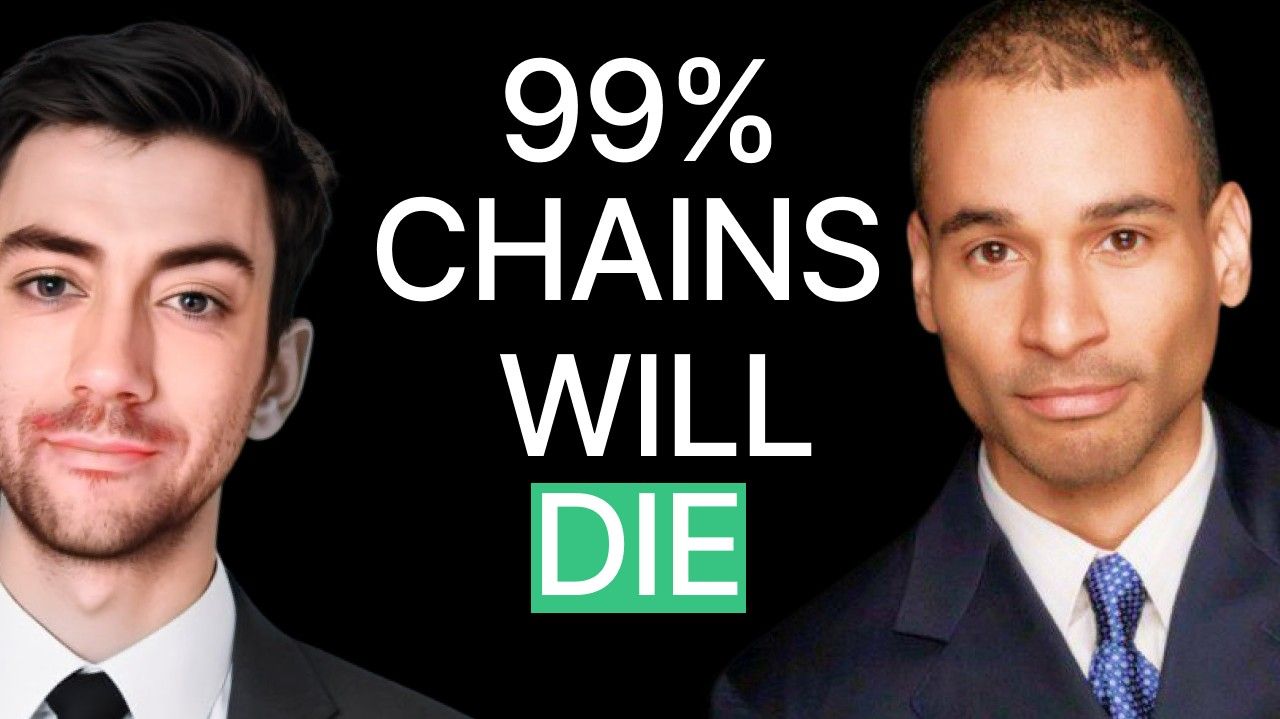
In this interview, Korath (Gamma Prime) speaks with the David Miller-Durant, Co-founder of Sig Network to understand how they enable cross-chain interaction without bridges or wrapped tokens, and what it means for the Web3 space.
Interview with David Miller-Durant, Co-founder of Sig Network
Korath (Gamma Prime):
David, really glad to have you with us. I’ve been following what you’re building at Sig Network, and it’s some of the most interesting infrastructure work happening in the space. To kick things off, give us a quick intro — your journey into crypto seems like it’s had quite a few chapters.
David Miller-Durant (Sig Network):
Happy to be here, Korath. Yeah, my crypto journey has been… colorful. I got my start selling Bitcoin — literally on the street — back in New Zealand. Not the safest thing in the world, but a very real education in what this space is about.
After that, I did a stint in TradFi, worked in investment banking, and then pivoted fully back into blockchain. I’ve worked at Digital Asset (Canton blockchain), DFINITY (Internet Computer), ran my own security consulting firm, and eventually joined NEAR, leading their emerging technologies team. That’s where I first started exploring chain abstraction – and that idea is now central to what we’re building with Sig Network.
Korath (Gamma Prime):
And Sig Network was spun out of that R&D work at NEAR, right? What exactly were you trying to solve?
David Miller-Durant (Sig Network):
Exactly. NEAR is fantastic at onboarding – user-friendly accounts, smooth experience but we kept running into a wall: users weren’t moving between apps. They’d onboard into one dApp and just… stay there.
We realized it wasn’t a product problem, it was an architectural one. So we built chain signatures — tech that lets a smart contract hold a private key and interact natively with any other blockchain. No wrapping. No bridges. Just direct asset and logic control, from one chain to another.
Korath (Gamma Prime):
So this is like a universal smart contract that can do things on Ethereum, Solana, NEAR, etc., from wherever it’s deployed?
David Miller-Durant (Sig Network):
Exactly. You can think of it as giving smart contracts access to the entire blockchain world, not just the one they’re deployed on. If your app is on NEAR but your users need to interact with DeFi on Ethereum, you shouldn’t have to build an entirely new backend. With Sig, you can do that in days.
Korath (Gamma Prime):
You’re solving what many see as one of the core limitations of current Web3 infrastructure — that we’ve accidentally rebuilt silos. Was that your realization?
David Miller-Durant (Sig Network):
Spot on. The original dream of Web3 was composability. But what we actually built are fragmented ecosystems with steep switching costs.
And users? They don’t care about blockchains. They want to do things. Swap tokens. Earn yield. Use applications. What chain it happens on shouldn’t matter – and we believe that in 18 months, it won’t.
Korath (Gamma Prime):
So in your view, cross-chain won’t be a “feature” – it’ll just be how apps work by default?
David Miller-Durant (Sig Network):
Exactly. People won’t say “I’m using a cross-chain wallet.” They’ll just say “I’m using a wallet.” Same with DEXes, lending protocols, games. Interop will be the plumbing – invisible, but critical.
Korath (Gamma Prime):
Tell me more about chain signatures. That sounds very different from the “cross-chain bridges” most people are used to.
David Miller-Durant (Sig Network):
Yeah, bridges are clunky they wrap assets, increase risk, and generally slow things down. What we do is simple in concept, hard in execution: we allow smart contracts to hold private keys in secure, programmable environments. That means they can sign transactions on other chains, just like a wallet.
So instead of a bridge moving a token, the contract on Chain A can just send ETH, SOL, BTC, USDC directly from within its own logic, because it holds the key.
Korath (Gamma Prime):
That’s wild. And this is live now?
David Miller-Durant (Sig Network):
Yes, mainnet since March. We’re working with teams across DeFi, AI, insurance, and more. One example we’ve made it so a Safe (smart wallet) on Ethereum can now hold and manage assets on other chains.
Korath (Gamma Prime):
So this tech could be the backbone of cross-chain messaging too?
David Miller-Durant (Sig Network):
Absolutely. Messaging is the heart of blockchain interoperability. Cosmos tried it with IBC. Superchain has its own ideas. But most of them require everyone to build on their system.
That’s not realistic. We’re going to Solana, Ethereum, StarkNet, Fuel, and embedding natively. We want to be the Cosmos IBC for everyone else with no need to ask permission.
Korath (Gamma Prime):
So who’s this for? Is it L1s? Is it apps?
David Miller-Durant (Sig Network):
Right now, we’re focused on applications. Chains are slow to integrate, but apps are agile. We help small DeFi apps on underused chains tap into global liquidity. We support AI agents that can take action across multiple blockchains. We’ve even got an insurance use case where a smart contract can audit results and trigger payouts across chains.
Korath (Gamma Prime):
That’s huge. So you’re giving underfunded teams a way to punch way above their weight?
David Miller-Durant (Sig Network):
Exactly. If you’re a great team stuck on a chain with $30M in TVL, we can make you multi-chain and market-ready in under two weeks. No grants, no tokens — we just put an engineer in your team, help you go live, and iterate fast.
Korath (Gamma Prime):
You also mentioned TradFi experience — and Digital Asset. Are you bringing Sig to that world?
David Miller-Durant (Sig Network):
Definitely. DA has been building blockchain rails for traditional finance for a decade. They’ve got trillions in RWAs (real-world assets) running on their infra.
They’re launching a global sequencer for these assets, and we’re exploring plugging Sig into it. That means crypto liquidity could meet traditional markets in a native, composable way.
Imagine moving USDC across chains in a transaction that settles RWAs at Goldman or the ASX — not as a workaround, but as a default path.
Korath (Gamma Prime):
Where do you see Sig Network going next?
David Miller-Durant (Sig Network):
Our long-term goal is to become the universal messaging layer for all chains, and eventually act as a shared sequencer.
That means a transaction can land on multiple chains at once — atomic, cross-chain by design.
You won’t care what gas token you’re using, or what L1 you’re on. Apps will deploy where they perform best, and interact everywhere else natively.
That’s what composability should have been all along. That’s what we’re building.
Korath (Gamma Prime):
David, this has been incredible. The work you and your team are doing could redefine the infrastructure beneath Web3. We’ll definitely be watching Sig Network closely.
David Miller-Durant (Sig Network):
Thanks, Korath. We’re just getting started, but the vision is clear and the demand is real. Appreciate you having me on. And next time, let’s go even deeper into the protocol layer. I promise to be even more opinionated!